

Report on the UNGA Side Event Japan’s Innovation and Multi-Stakeholder Partnerships for Tackling NCDs: Advancing the Pathway to UHC
On September 24, 2025, during the United Nations General Assembly (UNGA) in New York, the Japan Pharmaceutical Manufacturers Association (JPMA), co-sponsored by the Government of Japan (Permanent Mission of Japan to the United Nations) and with the support of IFPMA, hosted a side event entitled “Japan’s Innovation and Multi-Stakeholder Partnerships for Tackling NCDs: Advancing the Pathway to UHC.”
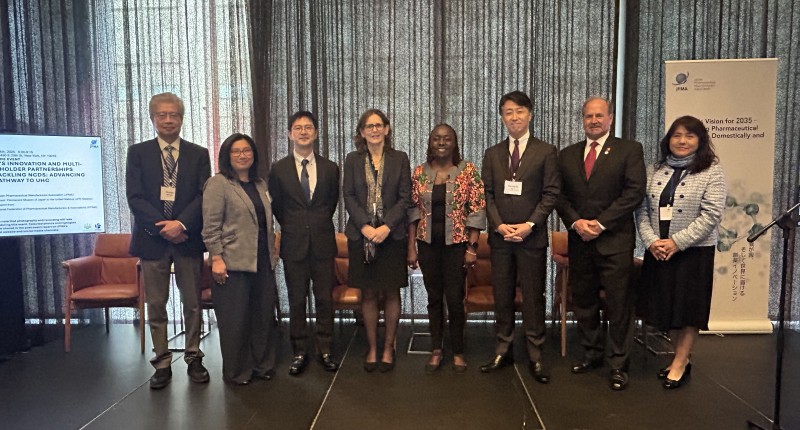
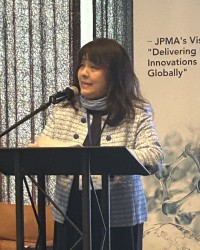
MC:Sachiko Nakagawa, Managing Director, Japan Pharmaceutical Manufacturers Association
The event, moderated by Dr. Sachiko Nakagawa, provided a platform for active discussions on Japan’s initiatives to address non-communicable diseases (NCDs) and advance universal health coverage (UHC), as well as the potential for strengthening global multi-stakeholder collaboration.
Below is an overview of the event and the key points discussed.
Opening Remarks
Addressing NCDs towards achieving UHC, Japan’s Initiatives
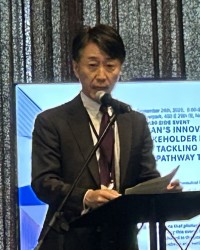
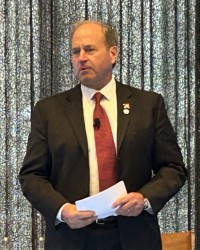
Satoshi Ezoe, M.D., Senior Assistant Minister for Global Health, Ministry of Health, Labour and Welfare, Japan
In his opening remarks, Dr. Satoshi Ezoe highlighted the critical global challenge posed by NCDs, which claim 43 million lives annually, with nearly 70% of those deaths occurring in developing countries and threaten both human well-being and sustainable development.
He reaffirmed that strengthening health systems is fundamental to tackling NCDs, and reiterated Japan’s commitment to stressing the importance of and promoting international efforts towards achieving universal health coverage (UHC) globally, based on the principle of “human security”. He further noted that it has been reported that too many people around the world still lack access to essential health services and face financial hardship due to catastrophic medical expenditures. He iterated that addressing NCDs and promoting UHC require innovation—new medicines, diagnostics, and technologies—, resilient health systems, sustainable financing, and multi-stakeholder partnership including governments, international organizations, the private sector, and civil society.
Dr.Ezoe introduced the ongoing collaboration between Japan, the World Health Organization, and the World Bank to launch “The UHC Knowledge Hub”—a platform aimed to strengthening health financing and building the capacity of policymakers in finance and health authorities in LMICs, as well as the UHC High-Level Forum, which will be convened in Tokyo on December 6th. He also highlighted that this year’s UN High-Level Meeting on NCDs would discuss promoting equitable access to safe, effective, and quality-assured health technologies. He expressed his expectation that this side event would serve as an opportunity to share Japan’s innovations and experience in public–private collaboration, and to inspire concrete solutions, new partnerships, and strengthened collective action.
Keynote Speech
Building Capacity for Lasting Impact: Japan’s Visionary Role in the Global NCD Response through UHC and Beyond
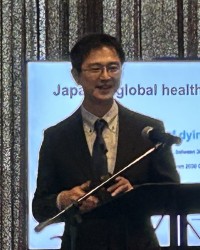
Ikuo Takizawa, Principal Research Fellow, JICA Ogata Sadako Research Institute for Peace and Development
Mr.Takizawa presented Japan’s contributions and future perspectives on the NCD response, drawing on Japan’s practical experiences in global health. He began by noting that Japan is one of the countries with the lowest mortality risk from NCDs worldwide. This outcome, he explained, reflects not only Japan’s UHC-based health system but also people (lifestyle, health-seeking behavior, etc.), and environmental (social, cultural, etc.) factors.
His lecture reiterated JICA’s approach to global NCD response from three perspectives: the UHC Vision, the Planetary Health Vision, and the Human Security Vision.
-
UHC Vision:
JICA is addressing NCDs through health systems strengthening for UHC in many countries. Examples included center of excellence approach leading to establishment of globally recognized technical hubs for specialist training like Bolivia-Japan Institute of Gastroenterology, primary health care (PHC) approach integrating NCD services to family and community health services in Central American countries (i.e., Nicaragua, Honduras, and Dominican Republic), and broader health systems approach involving both PHC and referral hospitals in Cambodia. JICA’s approach emphasizes sustainability, empowerment of local communities, and capacity-building of health workers and local institutions, working in partnership with international and national resources. In Fiji, JICA has supported the operationalization of a national NCD strategy focusing on health promotion and early intervention through expansion of workplace health checkups and follow up incorporating internationally recognized risk assessment tools (e.g. WHO/PEN) and motivational interviewing.
-
Planetary Health Vision:
He introduced JICA’s response to NCDs based on planetary health perspective, addressing the global syndemic of obesity, undernutrition and climate change through promotion of shokuiku (food and nutrition education). He shared JICA’s approach to school meal program based on shokuiku concept which emphasizes promotion of life-long healthy behavior through healthy meals appreciating locally produced nutrition-rich foods. Examples included programs in Mongolia, Malaysia and Indonesia. This model is expected to contribute to early formation of healthy dietary habits, sustainable NCD prevention, and healthy planet.
-
Human Security Vision:
Based on Japan’s development cooperation principle of human security, JICA’s efforts to address global NCD challenge place people at the center, empowering them to act with agency, while providing protection and fostering solidarity across society and national borders.
Mr.Takizawa pointed out that responding to NCDs is not limited to the health sector but is a challenge that spans education, the environment, the economy, and society as a whole. He emphasized the need for a comprehensive and sustainable approach. Concluding his lecture, he stated that “it is JICA’s mission to turn ideas into practice,” underscoring JICA’s commitment to contributing to global health solutions through capacity development of partner countries.
Panel Discussion
Multi-Sectoral Approaches to NCD Implementation: Accelerating Progress Toward UHC
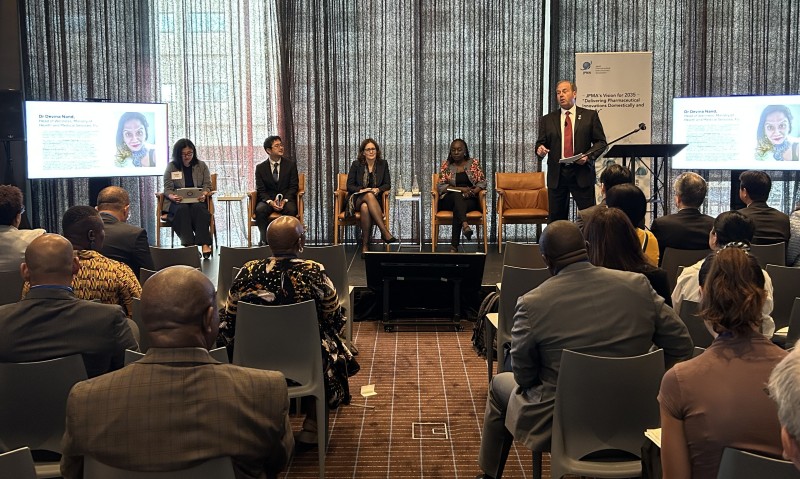
Moderated by Herb Riband, Executive Director of Access Accelerated, the panel brought together representatives from government, international organizations, industry, and civil society to explore global challenges and solutions in NCDs and UHC.
Mr.Riband opened the session by pointing out that NCDs and mental health are pressing global challenges. He emphasized that while global health faces many uncertainties, it also presents vast opportunities for innovative approaches and multi-stakeholder partnerships. The panel aimed to examine sustainable financing and institutional frameworks from diverse perspectives, including LMICs.
Panelists included:
-
Dr.Mary Amuyunzu-Nyamongo, Chair, NCD Alliance Kenya
- Dr.Devina Nand, Head of Wellness, Ministry of Health & Medical Services, Fiji *Remarks provided in advance (unable to attend on the day)
- Dr.Monique Vledder, Head of the Global Health, Nutrition and Population Department, World Bank
- Mr.Ikuo Takizawa, Principal Research Fellow (Global Health), Ogata Sadako Research Institute for Peace and Development, Japan International Cooperation Agency
- Fumie Griego, Ph.D., Head of Global Public Affairs, Takeda Pharmaceuticals
Key Interventions:
-
Dr.Nyamongo (Kenya):
Highlighted challenges in data gaps, limited access to medicines, and resource allocation skewed toward treatment over prevention. She also raised concerns about out-of-pocket expenses pushing households into poverty, and emphasized the need for people living with NCDs to be at the center of these discussions.
-
Dr.Nand (Fiji):
Reported that NCDs account for over 80% of deaths in Fiji, with economic losses exceeding USD 260 million annually. With JICA’s support, Fiji has advanced in training health workers, implementing health taxes, and workplace health promotion. Sustainable systems are being developed in collaboration with local communities.

-
Dr.Vledder (World Bank):
Stated that 4.5 billion people lack access to essential health services, and 2 billion face financial hardship due to health expenses. She stressed the balance between prevention and treatment funding, noting that prevention can yield significant cost savings. She reported that NCD-related funding has reached USD 2.6 billion in the past year, with rapid growth in recent years. She also highlighted the importance of sustainable system design, citing the role of AI and digital technologies in optimizing the health workforce, as well as partnerships with the private sector to reduce the cost of medicines.
-
Mr.Takizawa (JICA):
Reiterated that NCDs are cross-cutting issues affecting society at large. He called for sustainable system-building through integration of NCD measures into primary health care, capacity development of local health workers and health systems, and community engagement. He also highlighted the importance of dialogue between Ministries of Finance and Health in partner countries to address financial challenges, citing examples of JICA’s support to UHC through development policy loans. He pointed out increasing country ownership and leadership as sign of hope in the current global health finance ecosystem.

-
Dr.Griego (Takeda):
Shared examples of public–private collaboration through Access Accelerated, and Takeda’s employee-driven CSR projects. She highlighted the company’s support for mobile clinics in South Africa, which provided health services to over 8,700 people and advanced community health education. She emphasized the value of long-term, partner-centered commitments and locally driven programs. Finally, she stated that with all countries facing fiscal constraints, health financing - particularly catalytic funding - is critical.

Through the statements by the panelists, diverse perspectives and practical examples related to NCD responses and the advancement of UHC were shared. Strengthening the NCD response towards UHC requires a collective and long-term effort. Country leaders and global partners must prioritize building resilience and ensuring sustainability, developing systems and programs that endure beyond external support. Achieving this requires consistent political commitment, strong national leadership, and partnerships grounded in alignment with local priorities. Improving global health must ultimately be a shared responsibility, owned and advanced by all.
Building on these discussions, the latter half of the session featured an interactive Q&A, during which participants engaged in concrete dialogue on on-the-ground challenges and approaches to institutional design.
Q&A and Discussion:
-
Gender disparities:
Low health-seeking behavior among men was identified as a barrier to early NCD detection. Kenya’s initiative to train male community leaders was highlighted as a culturally grounded approach with potential for replication to other countries.
-
Nutrition and dietary habits:
Participants emphasized that community-based nutrition education is essential, as excessive salt and fat intake often stems from home cooking. They emphasized the importance of community-based nutrition education that goes beyond the limitations of food labeling. In particular, there was shared recognition that shaping healthy eating habits early through school meal programs can be highly effective for long-term NCD prevention.
-
Regional collaboration:
Cross-country learning models in Africa were discussed as effective mechanisms for policy exchange and improving institutional frameworks. Participants noted the importance of flexible design tailored to local cultures and systems when expanding such models to Latin America and Asia-Pacific.
-
Access to medicines and procurement:
Panelists discussed challenges of affordability and supply security for long-term treatments. They identified joint procurement models, digital platforms, engagement with private pharmacies, and the expansion of generic medicines as promising solutions for sustainable access. In particular, these measures were viewed as key to easing the financial burden on households and building resilient supply systems.
Through these discussions, the event underscored the diverse roles of stakeholders and outlined concrete directions for advancing international collaboration in NCD response and UHC.
Closing Remarks
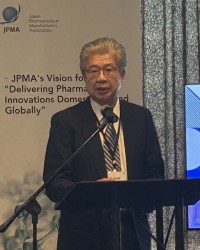
Dr. Sunao Manabe, Vice President, JPMA
In his closing remarks, Dr. Manabe stressed that both innovation and equitable access are essential in tackling NCDs and advancing UHC. Dr. Manabe reminded the audience that we are now navigating a complex and uncertain global environment-- one that makes collaboration all the more essential. He emphasized that progress depends on "uniting our strengths" through broad, multi-stakeholder partnerships that include the private sector and civil society, while respecting the leadership and priorities of countries. He reaffirmed JPMA’s commitment to contributing to global society through the creation of innovative medicines, while strengthening collaboration with governments, international organizations, and civil society to ensure no one is left behind. Dr Manabe also expressed his strong commitment to leveraging Japan’s experience and technology to contribute to the development of sustainable health systems, concluding his remarks with the expectation that this event would serve as an important first step toward that goal.
Conclusion
This event reaffirmed Japan’s contributions and the potential for international collaboration in addressing NCDs and promoting UHC. Achieving maximum impact with limited resources requires strong cooperation among governments, international organizations, industry, and civil society. The pharmaceutical sector has a vital role to play in this collective effort. JPMA’s International Affairs Committee will continue engaging in multi-stakeholder dialogue to advance sustainable solutions for global health.
(Prepared by Chikara Yoshida and Naoko Iizuka, International Affairs Committee)